Search This Blog

6.8.15

Jindal wisely keeps tax dollars from corrupt group

It might have seemed premature at the time, but Gov. Bobby Jindal either had advance notice or superior intuition when he correctly cancelled Louisiana’s service provision contract with Planned Parenthood Gulf Coast, Inc., for reasons now so obvious.

When the Center for Medical Progress began to release video recordings of employees and officials of Planned Parenthood’s national organization and its regional affiliates discussing pricing for human body parts and ability to change procedures to best obtain these – both selling parts and altering abortion methods to harvest these are illegal under federal law – Jindal ordered an inquiry into PPGC operations to see if it engaged in such activities. PPGC is the Texas-based affiliate that oversees the organization’s two clinics in Louisiana, of which neither performs abortions (it does in Texas). The information came back from the head of PPGC attesting the group did none of that.

Yet within days a released video featured another PPGC official admitting it would alter procedures in order to harvest parts for sale, directly contradicting the assertions in the reply back to Louisiana’s Department of Health and Hospitals. But the day before Jindal already had instructed DHH to cancel the contract, which can be done at will with 30 days’ notice by either party. The nearly $300,000 payment – about 1 percent of its revenues – was to cover other health services.

5.8.15

Harris must learn if you walk, quack like duck ....


It took him awhile, but state Rep. Lance Harris maybe has figured out the cause of his athlete’s mouth and seeks to begin a curative regimen. Whether that works remains to be seen.


Harris, co-chairman of the Louisiana’s Republican Legislative Delegation, famously opened wide for that foot when he sought to defend not just the rampant tax-raising (some of which is unconstitutional) too many of the GOP indulged in this spring during the regular legislative session, but also alleged in the process that the branch’s Republicans had held the line on other issues when in reality he helped oversee policy reversal in some areas. It was an amazing display of ineptitude, unawareness, and of claiming himself adorned in new clothes when actually naked.


Yet now, despite the fact that he spent much effort this spring voting for a few hundred million dollars in tax increases while trying to prevent the most defensible of hikes, in cigarette taxes, the owner of a chain of convenience stores has started a policy forum called “Take Back Louisiana” that reputedly will present an agenda to fix problems in fiscal, transportation, education, and individual freedom policy areas. Accordingly, one may add “chutzpah” to the qualities listed above, being that if he lifted a finger to back a number of good pieces of legislation in these areas in the recent session, he was entirely ineffective in their resolutions.

4.8.15

Redefinition of Scouting to cause concern for some


For those connected with Boy Scouting, the recent decision by the national organization to allow as leaders those men who openly engage in homosexual lives to serve in leadership positions challenges whether we should continue to support the organization.


Last week, the Boy Scouts of America reversed a ban on that in all situations, after a couple of years ago allowing boy members who view themselves as homosexually-inclined to join the organization. However, even without a ban imposed from above, individual troops may do so (states are divided into councils, which oversee troops that are sponsored by organizations, the majority by religious organizations) at their own discretions. As a point of reference, within 20 miles of the Shreveport or Monroe areas there are 32 troops, of which 27 are sponsored by a religious organization, of which 7 are sponsored by two sects – Baptists and Latter Day Saints – which initially have indicated their troops may no longer participate in Scouting, and several others are affiliated with Roman Catholicism that at the very least would not allow lifting of the ban.


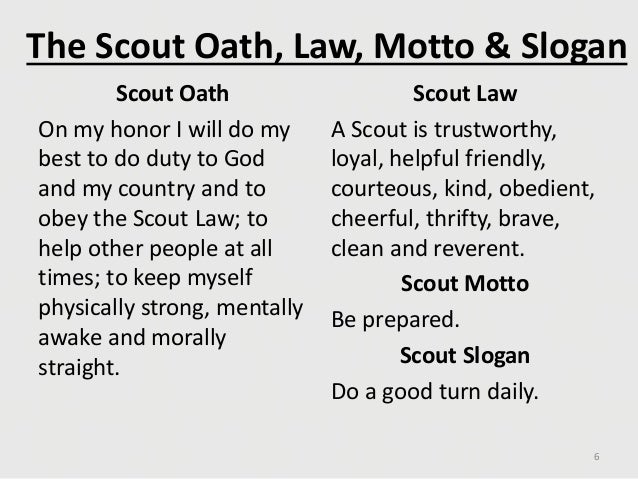
Compatibility between a desire to engage in and advocate homosexual behavior and with Scouting is difficult. Two important components of the Scouting way of life, the Scout Oath (“On my honor, I will do my best to … keep myself … morally straight”) and Scout Law (“A Scout is … clean and reverent), traditionally have implied that demonstrating or advocating a homosexual lifestyle conflicts with behavior expected of Scouts and their leaders. Generally not understood by those unfamiliar with Scouting is that it has deep religious roots, to the point that a belief in a divine being is necessary for membership and is reflected in the Scout Oath, and as the national group in essence has blessed the participation of individuals who lead lives contrary the traditional understanding of “morally straight” and “clean and reverent,” this declaration changes the definition of these terms.

3.8.15

Regional transportation idea faces too many hurdles


In all of the clutter expressed about Louisiana transportation needs and funding options that almost always focus on raising gasoline excise taxes at the pump, gubernatorial candidate Sen. David Vitter came up with something different. Unfortunately, in this case, “different” does not mean “better.”


It’s not that Vitter’s idea for a taxation regime at the local level that could come from a variety of sources was worse than tacking on more cents to the gallon – it actually could turn out better by presenting more options – but that in his idea was to make it regional. Employed in a few isolated instances in the country – perhaps the best examples being the Metro government in and around Portland, OR, and the Metropolitan Council in the area containing and around Minneapolis and St. Paul, MN – the idea is that greater efficiency in use of tax dollars and better planning come from subgovernments working together instead of in uncoordinated fashion or even at cross-purposes.


Transportation systems provide a key input into how metropolitan areas grow and the economic development that comes from that. Haphazard structuring resulting from discrete units deciding independently would come substantially less often through chance if some kind of regional government made decisions about building roads, mandating that this unit takes care of collecting the revenues to finance building and executing that task.

30.7.15

Obamacare keeps costing Louisianans needlessly

Thanks to the ill-conceived Patient Protection and Affordable Care Act (“Obamacare”), Louisianans face some of the highest health insurance costs and premiums in the country, and the bad effects of the law promise to keep on giving this gift that only those interested in wealth redistribution want.


As rates are being proposed for the 2016 year for the health exchanges ordered under law, Louisiana suffers through a 12 percent average increase for this year, tied for fourth-highest among the states and District of Columbia, which set the average premium for a “silver” plan at $359 a month, sixth-highest in the country and well above the national average of $314, for a state whose per capita income ranks only 30th. But, guess what, for those receiving subsidies, the price is expected to go up hardly at all – which means, of course, that taxpayers get billed for almost all of these increases.


This is one reason why Louisiana’s rates are so high and promise to go higher and more intensely so – given the relatively poor lifestyle choices made by a large number of qualifiers for subsidies (Louisiana as a whole ranks near the bottom of states on a number of key health indicators reflective of habits in the areas of eating, drinking, smoking, and exercise), their health is worse, but with them not having to pay much if anything for health care (either through Obamacare or Medicaid), they have reduced incentive to make the effort to live healthier lives that would cut down on costs. However, another reason is that the health insurance market nationally has become more and more concentrated, reflected particularly in Louisiana.

29.7.15

Caldwell actions merited Landry GOP endorsement

It’s not that it’s rare; it’s that it’s never happened before. Until the Louisiana Republican Party endorsed former Rep. Jeff Landry against incumbent Atty. Gen. Buddy Caldwell for the latter’s job this fall, no statewide office incumbent ever elected as a Republican had faced a challenger endorsed by the party. And it had good reason to make this historical move.


Of course, having been no statewide office GOP incumbents in the post-Reconstruction era until former Gov. Dave Treen’s win in 1979, it’s only been in the 21st century where there has been any real opportunities to have Republicans elected to these offices, much less run for reelection and have a strong challenger from the party emerge. The only other time this has happened was in 2011 when Lt. Gov. Jay Dardenne fended off former Plaquemines Parish Pres. Billy Nungesser, with the party issuing no endorsement on that occasion.


Nonetheless, to pick a challenger of the party over one of its incumbents should raise eyebrows regardless of how many opportunities have existed for that to happen. Yet if you happen to be a conservative, there’s no real mystery to why it happened this time.

28.7.15

Edwards campaign can't obscure disappointing truth


With three months to go, the gubernatorial campaign of state Rep. John Bel Edwards has increased the vigor of its whistling into the wind as more adverse information comes in about the state of all the candidates’ campaigns.


The Democrat faces three well-funded Republicans for the state’s top offices, Sen. David Vitter, Lt. Gov. Jay Dardenne, and Public Service Commissioner Scott Angelle. In the most recent fundraising period, he raised much less than these GOP adversaries, and at around a million bucks has one-fifth Vitter’s total banked, about half of Dardenne’s, and is even with Angelle, who did outraise him by a factor of seven in the latest period. Add in affiliated political action committee funds, and his disparity with all becomes even greater.


That’s not necessarily the end of the world. As the only Democrat in the contest and with his base disproportionately of the yellow dog variety, just having that singular “D” by his name on the ballot means he doesn’t need to spend a penny to get a quarter of the votes cast. The problem is having that “D” also repels at least a quarter of the vote and as for the other half makes them skeptical, and only vigorous campaigning that requires lots of cash can hope to flip a majority of that half open enough to voting for a Democrat in a statewide contest to do exactly that.

27.7.15

Unshackle Harrah's to maintain state revenues


As the culture in Louisiana changes, partial adaptation to that by policy-makers is as bad as not adapting to it at all, as the nexus of nonsmoking and casino revenues demonstrates.


Once may be a coincidence, but twice looks like a trend: monthly revenues are down year-over-year at Harrah’s New Orleans’ land-based casino twice in a row, just after the city banned smoking almost everywhere indoors making it the only casino in the state so circumscribed. It’s likely that a good portion of the $9.2 million fall, or about three-tenths of June, 2014 revenues, came because those who gamble and smoke don’t like to hover outside when lighting up and either don’t patronize the place or use time they would have gambled to puff away outside.


This has consequences for the bottom line of all of state and local governments. The state is required to receive the greater of 18.5 percent of gross revenues or $60 million a year from Harrah’s. Lopping off $110 million a year makes it rather difficult for Harrah’s to meet this expense and thereby stay in business; in fiscal year 2014 it paid just over $72 million to the state. Until 2001, the state demanded $100 million a year.

26.7.15

The Advocate column, Jul. 26, 2015

Louisiana right to reject Medicaid expansion

http://theadvocate.com/news/neworleans/neworleansnews/12991490-172/jeff-sadow-la-right-to