Search This Blog

13.8.15

Election all about Vitter still trends in his favor


From what the Louisiana State University Public Policy Lab’s latest survey tells us, not only is the 2015 governor’s race all about Sen. David Vitter, but that also it’s going the way he hopes as long as the field remains as is.


The organization today released its information concerning this contest, which probes a number of attitudinal questions but, as by its intent, did not ask voter preferences. Conducted over a considerable time span encompassing two to three months out from the election, about the only things a majority of voters knew were how they evaluated Vitter, what he stood for, that the state was headed in the wrong direction, and that they weren’t paying attention to the contest.


Over three quarters of respondents could give a favorability opinion on Vitter, with three-fifths of them seeing him favorably. By contrast, only half that number could give such an opinion on Lt. Gov. Jay Dardenne, where over three quarters of them saw him favorably, less than a third of that could opine about Public Service Commissioner Scott Angelle, whose favorability ratio was about like Dardenne’s, and barely a quarter of that had any opinion about the race’s only Democrat state Rep. John Bel Edwards, who also had the worst favorability ratio.

12.8.15

Anti-LA science act totalitarian crusade continues

Activities in the Bossier Parish School District drew the ire of a chief advocate against robust education in the service of a half-baked argument built upon wishful thinking and outright fantasy, but with disturbing totalitarian impulses.


Zack Kopplin, a Louisiana native, seems to have carved out for himself a niche as the Abraham Van Helsing of science education. Since his high school days, like the eponymous character in “Whack-A-Mole,” wherever something could be construed as even hinting at bare support of any religious content seeping into that subject, with him principally focusing on creationism challenging evolution, he pops up to bray about the vampirism of it all, having seemingly built his entire public life around this one thing. In the state, perhaps he is best known as the drone who appears annually in legislative hallways to attack the Louisiana Science Education Act, which reads in part that the state is to “to create and foster an environment within public elementary and secondary schools that promotes critical thinking skills, logical analysis, and open and objective discussion of scientific theories being studied including, but not limited to, evolution, the origins of life, global warming, and human cloning.”


Taken to contributing to the leftist Slate news/opinion online site, when challenged to give examples of creationism being taught in classrooms and he could not, he went to work to locate some. He found bits and pieces from across the state, including in Ouachita Parish that he especially singles out as Patient Zero, and he blames the LSEA for it all, calling it a “backdoor” way to teach creationism, which he associates with introducing religious content into science instruction.

11.8.15

Fluke poll no reason to say Angelle caught Vitter


So what does it mean when two different polls about the same political contest come up with differences beyond the marginal? It means that observers get a peek into the imprecise world of survey data and the impact it can have on larger perceptions.


The fourth poll in the past five months conducted by The Hayride website, in conjunction with the MarblePort agency, on Aug. 4 and 5 produced governor’s contest results consistent with the previous versions: Republican Sen. David Vitter led the pack, a little ahead of Democrat state Rep. John Bel Edwards, and then with about half as much support comes Republicans Public Service Commissioner Scott Angelle and Lt. Gov. Jay Dardenne. Since May, Vitter and Dardenne have drifted down a bit, Edwards has drifted up a bit, Angelle has made much greater progress, and the undecided vote has shed about a third.


This gives the results what is termed “face validity;” that is, it seems consistent with other indicators. Vitter had the most name recognition and ought to lose some support as other candidates become better known; Angelle has had the most advertising and ought to come up the most; the undecided slowly have peeled off as the election approaches; the results move slowly but steadily in certain understandable directions.

10.8.15

Hypocrisy marks reaction to PAC legal proceeds


A politicized organization connected to the beneficiary of a court decision that strikes down a government regulation receives reimbursement from the state of Louisiana for its legal costs. Then a hue and cry arises from some quarters, not complaining about how the state never should have defended its jurisprudence but about how the winner should return voluntarily the money due to Lambda Legal and the Forum for Equality to taxpayers to help out a strapped state … uh, maybe not, considering with whom we’re dealing here.


Last month, the U.S. Supreme Court decided to protect a class of individuals, whose class is defined solely by their behavior and this behavior is not granted in the document special Constitutional status unlike that emanating from political or religious belief, from states refusing to grant them marriage licenses because they are of the same sex. Louisiana had a constitutional prohibition against such marriages, which had spillover effects including adoptions. As a result of that ruling, a similar case as that decided by the nation’s highest court that was working its way through the judiciary in the state and another dealing with adoptions were concluded in favor of the plaintiffs, who challenged the state ban and therefore will have the state pay their costs and who were represented by the above organizations and a New Orleans law firm to which they owe funds as a result.


But when those declarations were made by the various courts involved, no pleas emerged for the special interest groups involved not to bill the parties who then could get the reimbursement from the state. If there was any grumbling at all, it surrounded the fact that the state had spent $330,000 in defending the rule of law.

6.8.15

Jindal wisely keeps tax dollars from corrupt group

It might have seemed premature at the time, but Gov. Bobby Jindal either had advance notice or superior intuition when he correctly cancelled Louisiana’s service provision contract with Planned Parenthood Gulf Coast, Inc., for reasons now so obvious.

When the Center for Medical Progress began to release video recordings of employees and officials of Planned Parenthood’s national organization and its regional affiliates discussing pricing for human body parts and ability to change procedures to best obtain these – both selling parts and altering abortion methods to harvest these are illegal under federal law – Jindal ordered an inquiry into PPGC operations to see if it engaged in such activities. PPGC is the Texas-based affiliate that oversees the organization’s two clinics in Louisiana, of which neither performs abortions (it does in Texas). The information came back from the head of PPGC attesting the group did none of that.

Yet within days a released video featured another PPGC official admitting it would alter procedures in order to harvest parts for sale, directly contradicting the assertions in the reply back to Louisiana’s Department of Health and Hospitals. But the day before Jindal already had instructed DHH to cancel the contract, which can be done at will with 30 days’ notice by either party. The nearly $300,000 payment – about 1 percent of its revenues – was to cover other health services.

5.8.15

Harris must learn if you walk, quack like duck ....


It took him awhile, but state Rep. Lance Harris maybe has figured out the cause of his athlete’s mouth and seeks to begin a curative regimen. Whether that works remains to be seen.


Harris, co-chairman of the Louisiana’s Republican Legislative Delegation, famously opened wide for that foot when he sought to defend not just the rampant tax-raising (some of which is unconstitutional) too many of the GOP indulged in this spring during the regular legislative session, but also alleged in the process that the branch’s Republicans had held the line on other issues when in reality he helped oversee policy reversal in some areas. It was an amazing display of ineptitude, unawareness, and of claiming himself adorned in new clothes when actually naked.


Yet now, despite the fact that he spent much effort this spring voting for a few hundred million dollars in tax increases while trying to prevent the most defensible of hikes, in cigarette taxes, the owner of a chain of convenience stores has started a policy forum called “Take Back Louisiana” that reputedly will present an agenda to fix problems in fiscal, transportation, education, and individual freedom policy areas. Accordingly, one may add “chutzpah” to the qualities listed above, being that if he lifted a finger to back a number of good pieces of legislation in these areas in the recent session, he was entirely ineffective in their resolutions.

4.8.15

Redefinition of Scouting to cause concern for some


For those connected with Boy Scouting, the recent decision by the national organization to allow as leaders those men who openly engage in homosexual lives to serve in leadership positions challenges whether we should continue to support the organization.


Last week, the Boy Scouts of America reversed a ban on that in all situations, after a couple of years ago allowing boy members who view themselves as homosexually-inclined to join the organization. However, even without a ban imposed from above, individual troops may do so (states are divided into councils, which oversee troops that are sponsored by organizations, the majority by religious organizations) at their own discretions. As a point of reference, within 20 miles of the Shreveport or Monroe areas there are 32 troops, of which 27 are sponsored by a religious organization, of which 7 are sponsored by two sects – Baptists and Latter Day Saints – which initially have indicated their troops may no longer participate in Scouting, and several others are affiliated with Roman Catholicism that at the very least would not allow lifting of the ban.


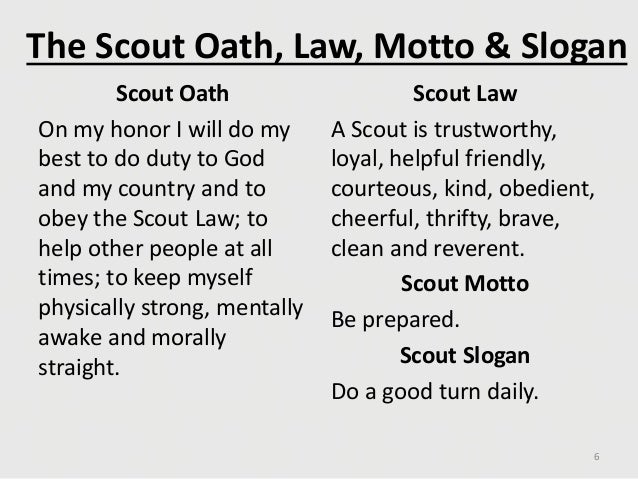
Compatibility between a desire to engage in and advocate homosexual behavior and with Scouting is difficult. Two important components of the Scouting way of life, the Scout Oath (“On my honor, I will do my best to … keep myself … morally straight”) and Scout Law (“A Scout is … clean and reverent), traditionally have implied that demonstrating or advocating a homosexual lifestyle conflicts with behavior expected of Scouts and their leaders. Generally not understood by those unfamiliar with Scouting is that it has deep religious roots, to the point that a belief in a divine being is necessary for membership and is reflected in the Scout Oath, and as the national group in essence has blessed the participation of individuals who lead lives contrary the traditional understanding of “morally straight” and “clean and reverent,” this declaration changes the definition of these terms.

3.8.15

Regional transportation idea faces too many hurdles


In all of the clutter expressed about Louisiana transportation needs and funding options that almost always focus on raising gasoline excise taxes at the pump, gubernatorial candidate Sen. David Vitter came up with something different. Unfortunately, in this case, “different” does not mean “better.”


It’s not that Vitter’s idea for a taxation regime at the local level that could come from a variety of sources was worse than tacking on more cents to the gallon – it actually could turn out better by presenting more options – but that in his idea was to make it regional. Employed in a few isolated instances in the country – perhaps the best examples being the Metro government in and around Portland, OR, and the Metropolitan Council in the area containing and around Minneapolis and St. Paul, MN – the idea is that greater efficiency in use of tax dollars and better planning come from subgovernments working together instead of in uncoordinated fashion or even at cross-purposes.


Transportation systems provide a key input into how metropolitan areas grow and the economic development that comes from that. Haphazard structuring resulting from discrete units deciding independently would come substantially less often through chance if some kind of regional government made decisions about building roads, mandating that this unit takes care of collecting the revenues to finance building and executing that task.